
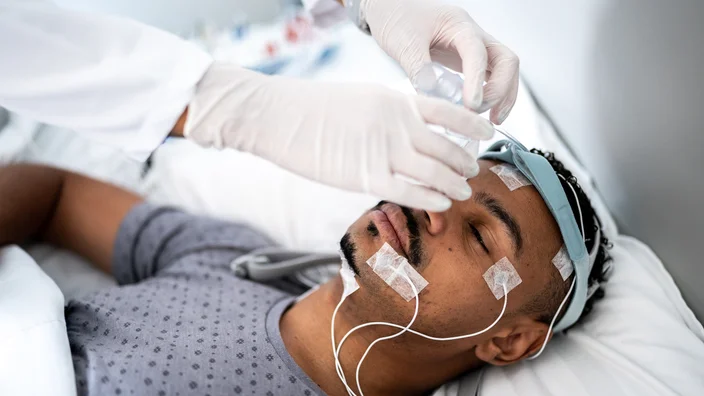

Polysomnography, known as a sleep study, is a test used to diagnose sleep disorders. Polysomnography records your brain waves, the oxygen level in your blood, and your heart rate and breathing during sleep. It also measures eye and leg movements.
Why it’s done
Polysomnography monitors your sleep stages and cycles. It can identify if or when your sleep patterns are disrupted and why.
The typical process of falling asleep begins with a sleep stage called non-rapid eye movement (NREM) sleep. During this stage, brain waves slow down. This is recorded during a sleep study with a test called an electroencephalogram (EEG).
After an hour or two of NREM sleep, brain activity picks up again. This sleep stage is called rapid eye movement (REM) sleep. Your eyes quickly move back and forth during REM sleep. Most dreaming occurs during this stage of sleep.
You typically go through multiple sleep cycles a night. You cycle between NREM and REM sleep in about 90 minutes. But sleep disorders can interfere with this sleep process.


Reviews
There are no reviews yet.